
Case Study
DTFR Water-Well Drilling Reaches Target Depth With Less Than 1% Deviation
Boart Longyear used dual-tube flooded reverse circulation drilling in the Pilbara to complete large-diameter mine water wells while controlling circulation, discharge water and hole deviation.
Executive snapshot
- Client
- Pilbara iron ore mines
- Service Used
- Dewatering & Water Production
- Operating Environment
- Fractured aquifers
- Project Outcome
- Wells to 250 m
Project Requirements
What the project required

Project Conditions
Drill in active mine environments where fractured ground and high water volumes can interrupt conventional drilling.
Technical Requirement
Complete large-diameter wells to target depth while maintaining circulation, hole integrity and accurate alignment.

Operational Requirement
Minimize discharge water and avoid sump-related interruptions that could interfere with mining operations.
Operational Challenge
What made the project challenging
The wells had to reach target depth through difficult formations while reducing the water-management problems common to conventional methods.
Project Condition
Fractured and friable formations created risk of circulation loss, washout and collapsing boreholes.
Technical Constraint
Large-diameter wells required reliable hole integrity and controlled deviation through changing geology.
Operational Pressure
High discharge volumes could fill sumps quickly and force drilling to stop in active mine areas.
Boart Longyear Approach
How Boart Longyear approached the work
-
Experienced Crews
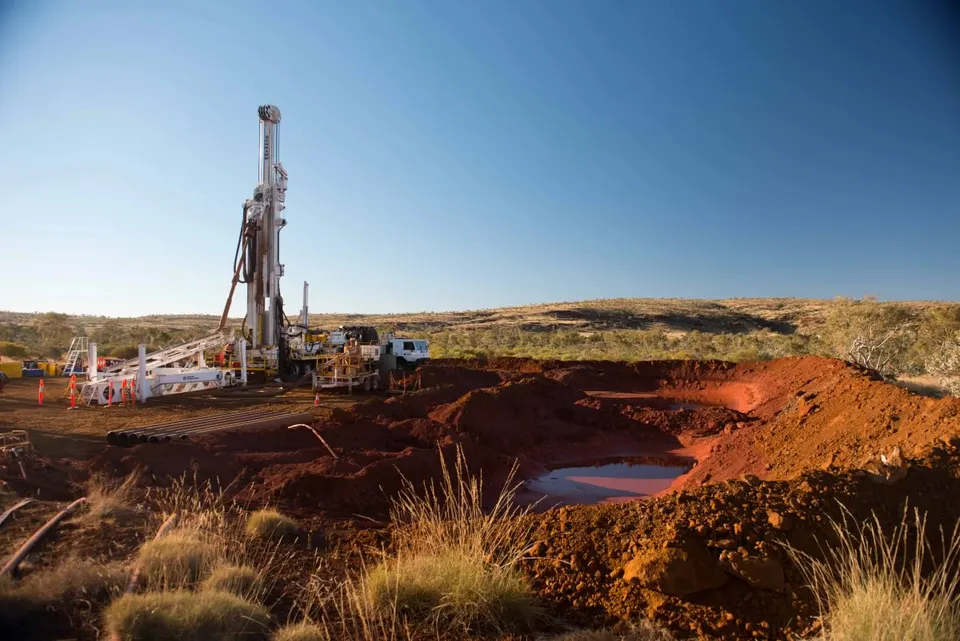
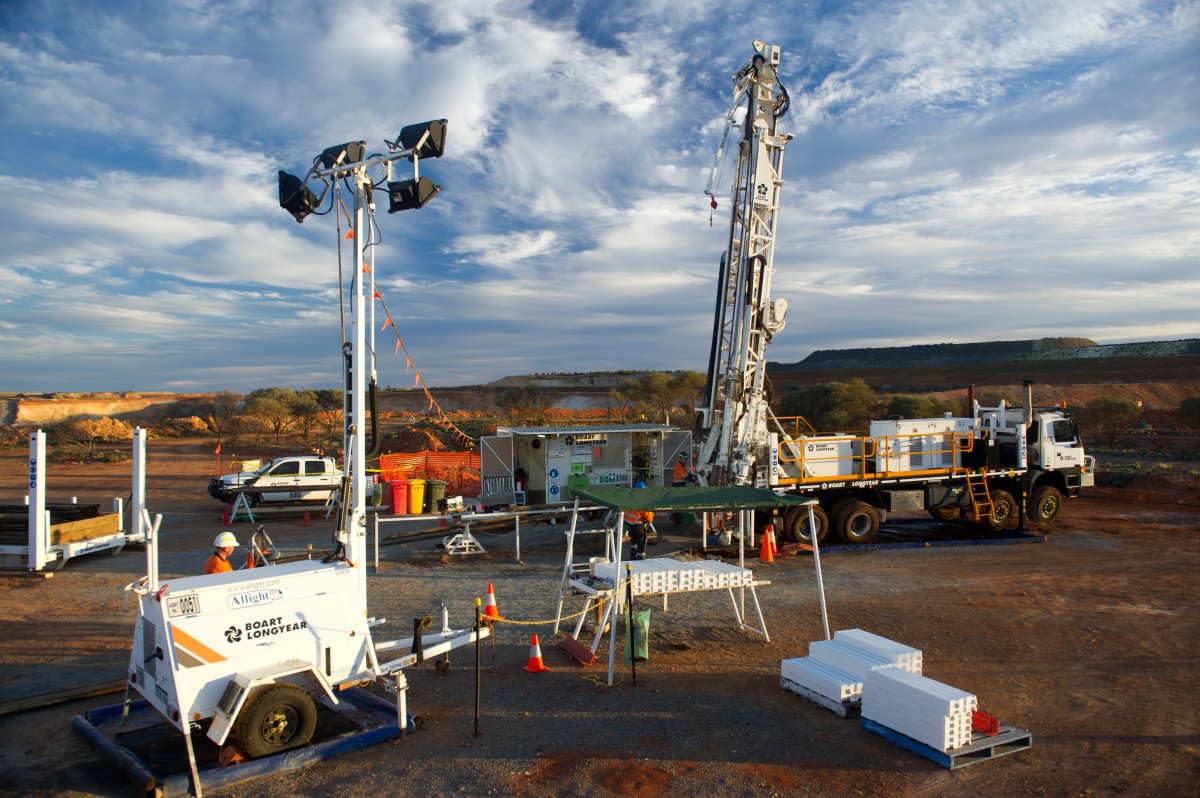
Boart Longyear crews applied DTFR drilling across active and future Pilbara mine sites where high-producing aquifers and difficult ground challenged conventional methods.
-
Method And Equipment Planning
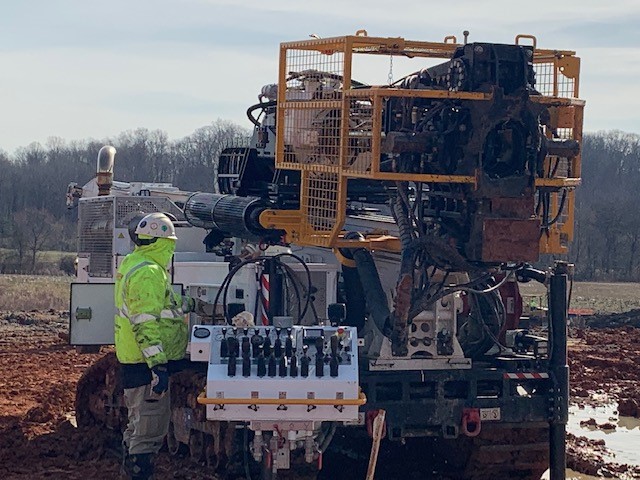
The mobile DTFR rigs accommodated casing up to 28 inches, provided 130,000 lb of pullback, and used a closed-circulation mud system.
-
Equipment And Tooling
A proprietary mud tank and cutting-exchange system returned cuttings through the drill string; tri-cone tooling and 10- to 12-inch production strings supported well completion.
-
Safety Systems And Field Controls
The closed-loop system reduced the drilling footprint, eliminated the need for large sumps, and produced almost no discharge during drilling.
-
Site Planning
Highly mobile rigs and reduced surface-water infrastructure supported work at active mine sites without hindering mining operations.
-
Technical Supervision
Crews maintained circulation with the bit submerged, replaced drilling mud without stopping, and handled changing formations including iron, friable ore, shale and hard chert.
-
Regional And Field Support
A fleet of DTFR rigs supported multi-year Pilbara contracts and approximately 2,300 m of drilling over one year.
-
Execution Discipline
The team reached target depth in a single pass and continued through changing formations without stopping because of lost circulation.
-
Quality / Project Outcome
The program drilled approximately 2,300 m, completed wells to 250 m, and achieved less than 1% deviation on a documented 144 m well.
Outcome / Proof
What the work delivered
<1% Hole Deviation
A documented 144 m ex-pit dewatering well was completed with less than 1% deviation.
2,300 m Drilled
Boart Longyear drilled about 2,300 m, with completed wells reaching depths up to 250 m.
No Circulation-Loss Stoppages
Changing formations were handled without stopping drilling because of lost circulation; DTFR also produced almost no discharge during drilling.
Why It Mattered
Impact
DTFR improved well-completion reliability while reducing water-management interruptions in active mine environments.
Related Capabilities
Services connected to this project
Water Production Drilling
Explore how this capability can support your drilling program.
Explore Water Production Drilling >
Dewatering
Explore how this capability can support your drilling program.
Explore Dewatering >
Pump Services
Explore how this capability can support your drilling program.
Explore Pump Services >
Rotary Drilling
Explore how this capability can support your drilling program.
Explore Rotary Drilling >Case Studies
Related proof
Electric Rotary Drilling Meets 65 dBA Residential Noise Limit
Boart Longyear used an electric/hydraulic rotary drilling system and site controls to complete a municipal water well in a residential area while meeting a 65 dBA noise limit.
Paste Fill Hole Reaches 2,152 ft in a One-Shot Pass
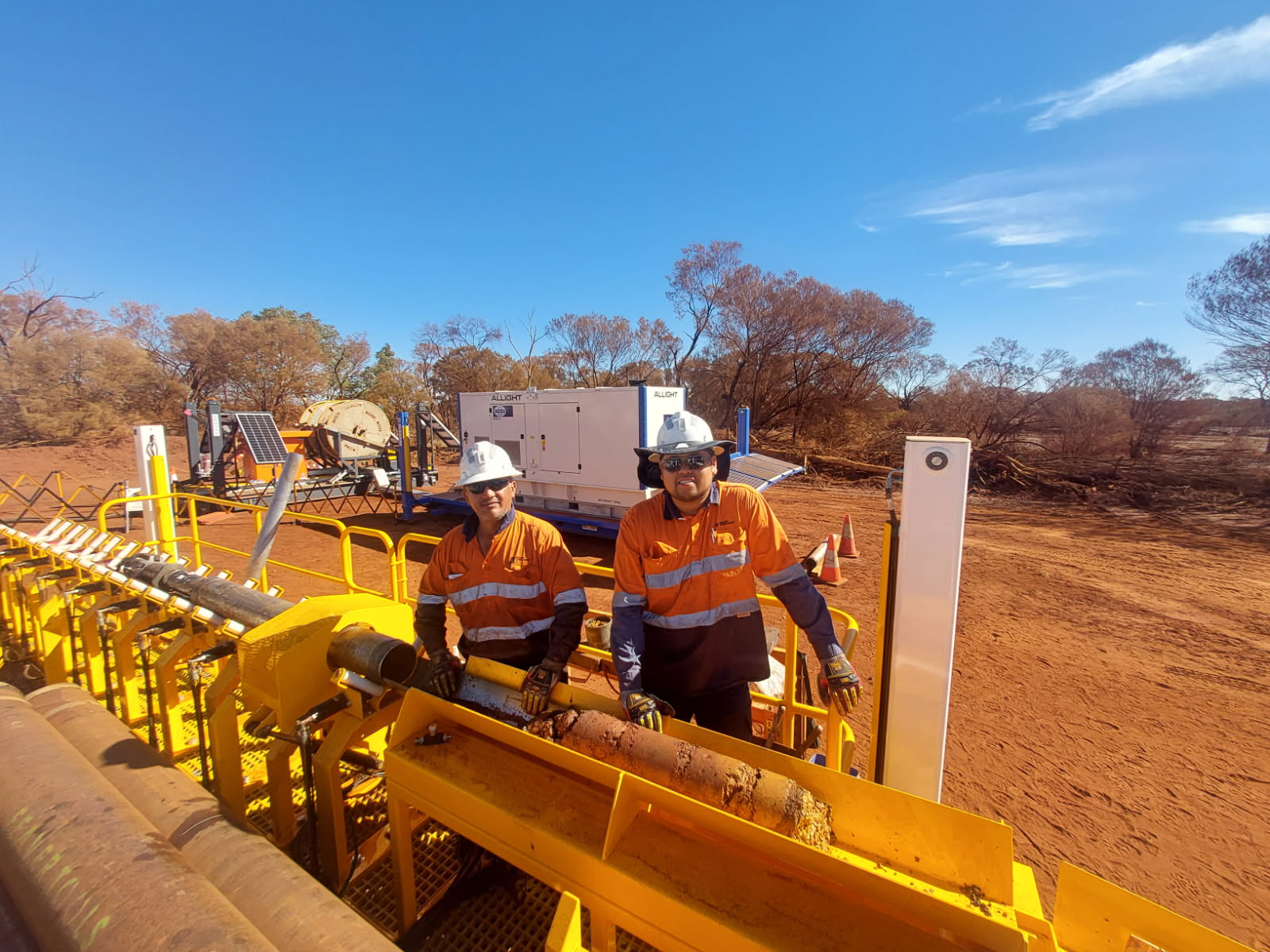
At Paulsens Gold Mine, Boart Longyear drilled a 656 m paste fill hole in one pass, reaching the target in 39 shifts and intersecting within 2.1 m of center.
Canadian Coring Program Averages 98.39% Core Recovery With Zero Re-Drills
Boart Longyear completed 218 holes and about 18,000 m of drilling for CNRL-Albian Sands while averaging 98.39% core recovery with zero re-drills and zero injuries.
Let’s talk
Have a similar project requirement?
Talk with Boart Longyear about the method, equipment, and field support needed for your drilling program.